thegardendirectory.org
A comprehensive website review service for gardening and landscaping businesses
★ Get your own unique FAQ + Selling Points on your profile page
★ be seen by 1000s of daily visitors and win new business
thegardendirectory.org Miniblog
Why Your Autumn Clean-Up Is Evicting Half The Garden
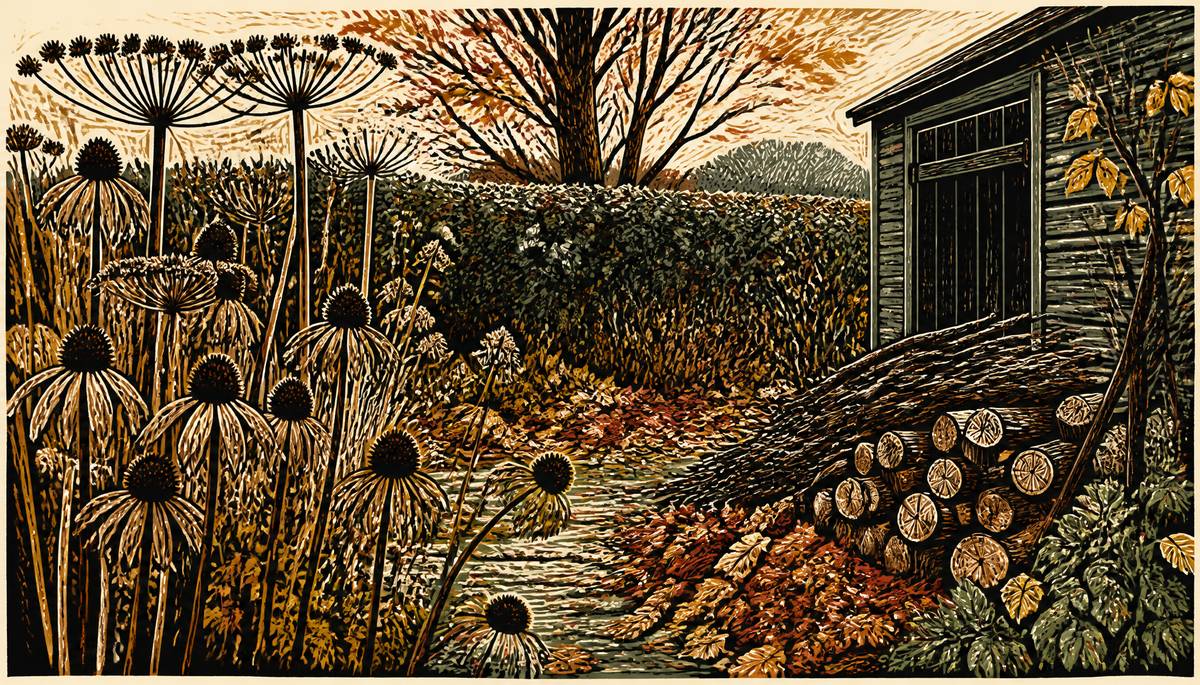 Autumn encourages a certain brisk, censorious mood in the gardener. One sees a border beginning to collapse into itself, a drift of leaves collecting under a hedge, a stand of blackened stems that no longer flatter anyone, and immediately reaches for gloves and bin bags as if decency itself were at stake. The place must be put in order. One cannot have all this decline lying about. Yet that annual campaign of improvement, so satisfying to human neatness, can amount to a mass eviction for the things that live there.
The trouble is that what looks finished to us is often still useful to something else. A dried sunflower head, which to the tidying eye appears merely shabby, is a larder of seeds to a bird that has different standards of elegance. Echinacea and other spent flowers do much the same. Those brittle stalks and hollow stems that seem to have outlived their purpose may be exactly the sort of winter quarters insects are looking for. Dense, fading growth can shelter small creatures from cold, wet and hungry attention. A garden stripped to bare soil and clipped outlines may look efficient, but efficiency is not always hospitable.
Leaves suffer from a similar misunderstanding. People talk of them as if they were litter produced by malicious trees. Certainly, a thick layer on a lawn will smother the grass, and there is no sense in allowing paths to become slippery or drains blocked. But leaves tucked beneath hedges, gathered around shrubs or left in some unimportant corner are not a nuisance merely because they are no longer attached to a branch. They provide cover for wildlife and, with time, rot down into something the soil can use. Nature, left to her own methods, is not quite as wasteful as the autumn clear-up suggests.
Then there is dead wood, another item against which the tidy-minded often carry a private grudge. A few branches stacked behind a shed or a small log pile in a quiet part of the garden may not look thrilling in the manner of a municipal bedding scheme, but they can be of real use to insects and other creatures needing shelter. This does not mean surrendering the entire place to bramble, fungus and romantic neglect. It means allowing one modest area to perform a function beyond looking presentable from the kitchen window.
The sensible approach is selective untidiness, which sounds paradoxical but is in fact only common sense with less vanity. Clear the paths. Remove diseased material. Cut back what truly needs cutting back. Keep an eye on anything likely to become a problem. But do not assume that every browned stem is an insult and every fallen leaf a failure. Leave seed heads standing until spring. Let leaves remain beneath shrubs where they are doing no harm. Allow one quiet patch of the garden to be, for a few months, a place where human tidiness does not have the only vote.
There is, incidentally, no need to pretend this is all virtue and sacrifice. An untidy autumn garden can be very handsome. Dried grasses, seed heads and skeletal stems often look better in low winter light than they ever did in July’s more obvious abundance. Frost catches them and suddenly what seemed merely spent becomes intricate. The garden acquires structure of a sterner, quieter kind. One notices shapes instead of colours, silhouettes instead of blooms. It is a different beauty, but beauty all the same, and less needy.
Part of the difficulty is that gardening advice has long contained a faintly moral note, as if one’s character were visible in the sharpness of one’s edging. The clean sweep, the emptied border, the immaculate bed ready for winter: these things suggest discipline and competence. Fair enough. But a garden is not a sitting room, and autumn is not a summons to sterilise. If the place supports birds, insects and small animals, then some degree of mess is not carelessness but provision.
So before launching the annual purge, it is worth asking what exactly is being improved. If the answer is simply that the garden will look tidier for a week or two, the bargain may be poor. Half the life of the place depends on the bits we are most inclined to remove: the leaves under the hedge, the stems left standing, the heap of sticks in the corner. One does not have to live among chaos to keep them. One only has to resist the rather pompous idea that every sign of the season must be scrubbed away at once.
Posted on 5 October 2026
Why Do Tiny Gardens Feel Bigger The Moment Plants Start Climbing?
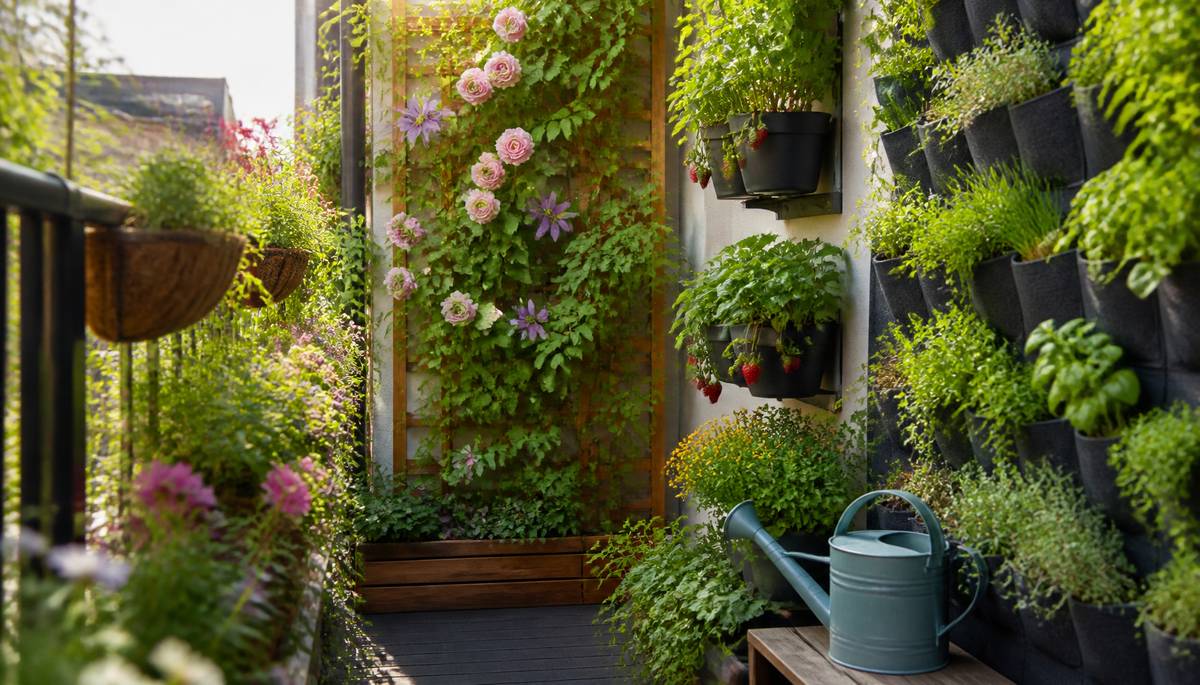 A tiny garden feels less mean the instant something starts ascending. The trick is psychological as much as practical: once growth leaves the horizontal and heads for the wall, fence or balcony rail, the eye follows. Suddenly the plot has volume.
That is the quiet brilliance of vertical gardening. If the ground is already spoken for, use the upright surfaces. A trellis is the obvious first move, and usually the best. Clematis, jasmine and climbing roses can turn a blank boundary into something lush and tall, while beans and some cucumbers will scramble upwards and stop hogging precious soil below.
Then there are hanging baskets, which needn’t be reserved for petunias and polite summer colour. Herbs and compact edible plants can do very well in them. Wall-mounted pots and tiered planters also earn their keep, converting a sunny fence into a productive strip of growing space.
If you want to go further, a living wall creates a dense vertical patchwork of foliage using rows of planting pockets or containers. It looks rich without demanding a traditional border.
There are, of course, a few realities. Raised containers dry out faster, so watering matters. Fixings must be sturdy, especially once wet compost adds weight. And plants need to suit the light you actually have, not the light you wish for.
Plants don’t recognise property lines. They just see room above. Posted on 26 September 2026
Are You Watering Your Garden All Wrong?
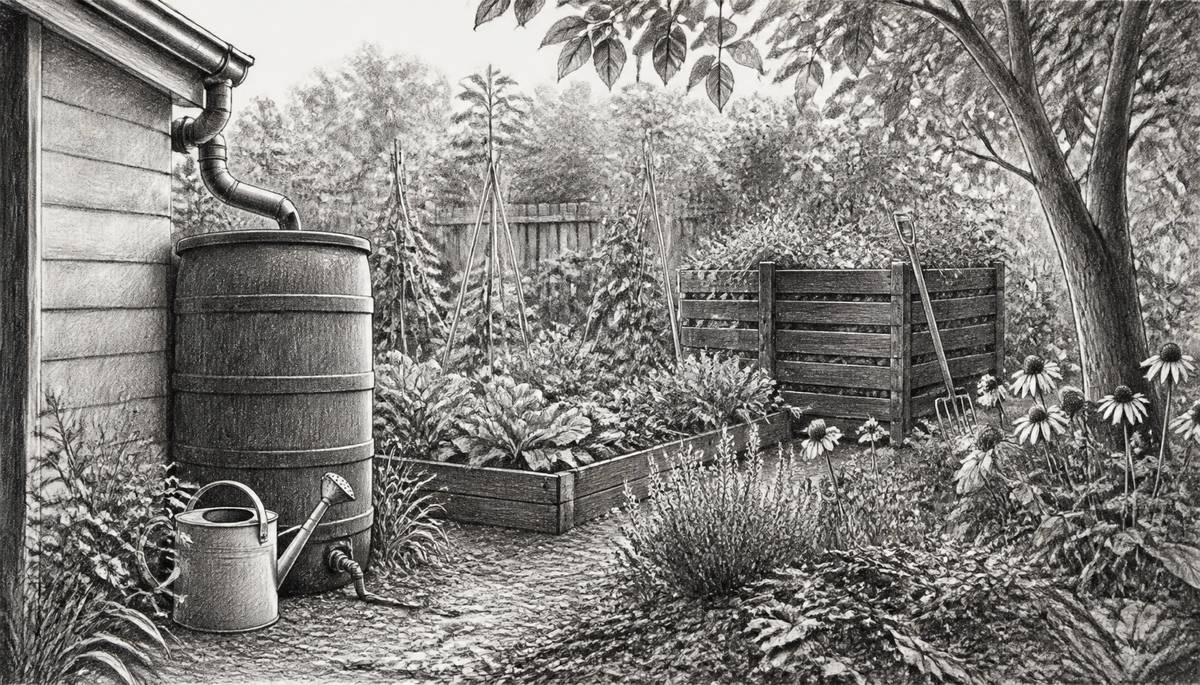 A lot of gardens are being watered like they’ve offended somebody. Too much, too often, and usually with drinking-quality water that plants didn’t even ask for.
The smarter approach is simpler. Catch rain from the roof in a water butt and use that during dry spells. It cuts demand on the mains and gives plants water that’s been sitting at the right temperature, not blasted straight from a cold tap like a shock treatment.
Then deal with the soil, because thirsty soil is often the real problem. A decent mulch around plants helps hold moisture in, slows weeds down and, if it’s organic, breaks down over time to improve the ground. Compost does similar work. Vegetable peelings, grass cuttings and fallen leaves can become a useful soil booster instead of bin fodder.
Plant choice matters as well. If a plant hates your soil, your rainfall and your exposure, no amount of hosepipe heroics will make it happy for long. Pick varieties that suit local conditions and you’ll spend less time watering, feeding and trying to keep the peace.
Sustainable gardening isn’t about turning your back garden into a nature reserve with signage. Often it means doing less, but doing it better: reuse organic waste, skip peat-based products where possible, protect the soil and let nature handle more of the workload. It’s been doing this job longer than us, after all.
Posted on 21 September 2026
The Secret To A Calmer Garden Is Not More Space
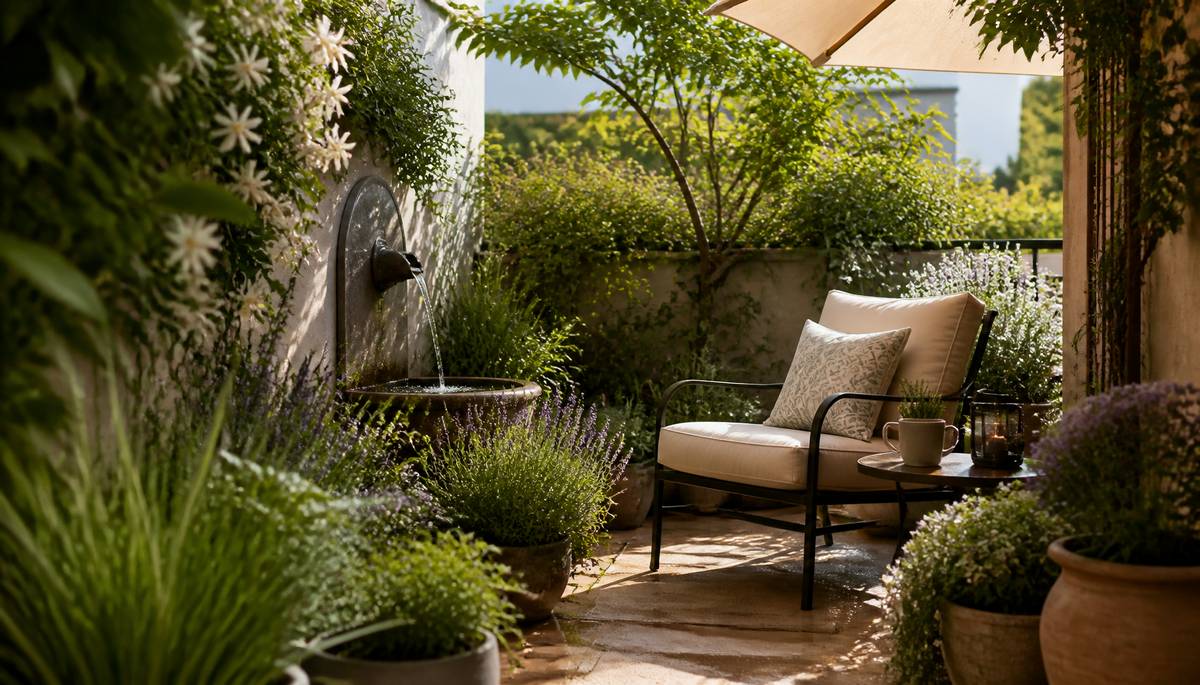 People often treat calm as a question of acreage, as if serenity arrives by the square metre. It doesn’t. A small patio, a balcony, even a poky courtyard can do the job beautifully if the pieces work together.
Start with the seat. Not any old chair shoved against the wall, but somewhere you’ll actually want to be at eleven in the morning and again later on. A spot that feels blissful over coffee may be punishing by mid-afternoon, so pay attention to sun, heat and breeze before declaring victory.
Then create a sense of shelter. Plants do this better than fences ever can. Tall grasses, shrubs and climbers soften the edges and make a space feel held rather than exposed. Lavender, jasmine and herbs earn their keep twice over, adding scent as well as greenery. If you can’t plant into the ground, pots will still give you height, texture and privacy.
A little water helps. Not Versailles. Just a modest fountain or circulating feature can hush traffic noise and give the eye somewhere to settle.
Shade matters more than people admit. Trees are ideal, but pergolas, awnings, umbrellas and climbers can rescue a sun-blasted corner. Add low, carefully placed lighting for evening, and stop there. The best restful garden is not another tiresome project. Often, a comfortable chair, a few plants and a patch of shade are quite enough.
Posted on 18 September 2026
The Deadheading Trick That Keeps Helenium Blooming Till Frost
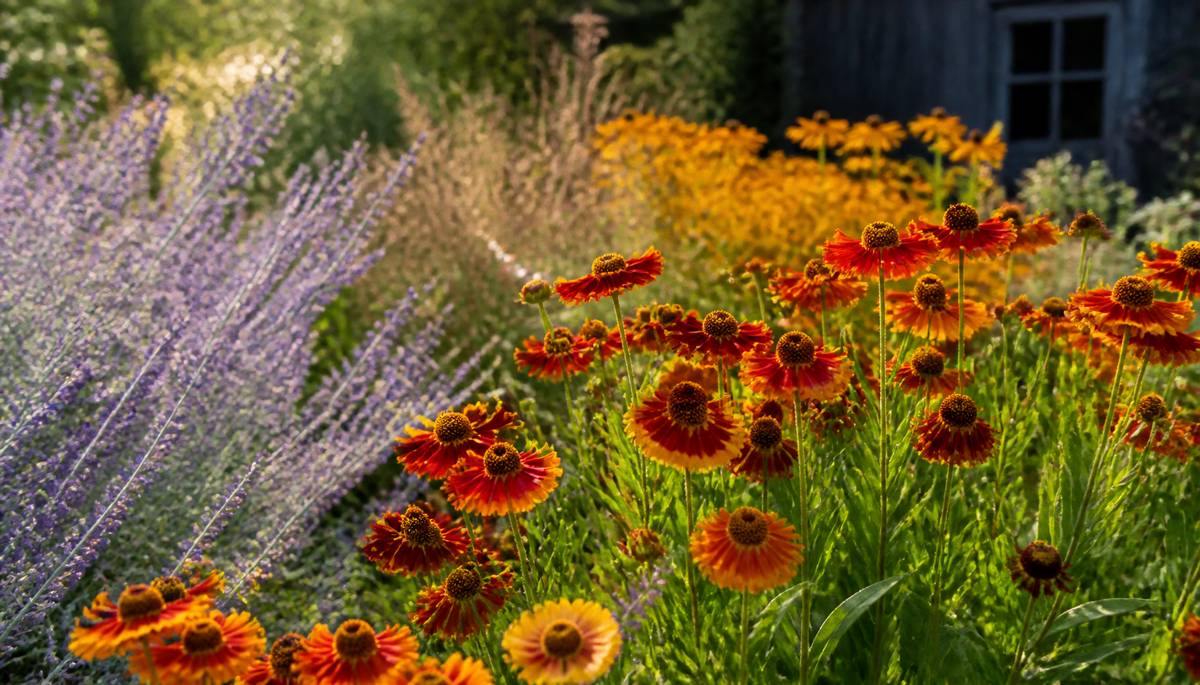 Late summer is the awkward pause in the flower border: the early stars have packed up, the autumn crowd haven’t quite arrived, and everything can look a bit emotionally beige. This is where helenium earns its keep.
A hardy native perennial in the aster family, helenium throws up clusters of small, dome-centred flowers in hot shades of gold, orange and burgundy from midsummer onwards. Pollinators are keen, pests largely leave it alone, and it’s happy in full sun with moist, well-drained soil, though it can also cope with damper spots.
The trick to keeping it going till frost is gloriously unglamorous: deadhead it. Snip off spent flowers regularly and the plant keeps pushing out more, instead of deciding it’s finished for the year and slumping into seed-making mode. It’s basically floral nagging, and it works.
Don’t overfeed it. A spring mulch of compost is plenty; too much fertiliser gives you lots of leaves and a disappointing shortage of flowers. If space is tight, newer compact sorts such as ‘Short n Sassy’ stay at roughly 30 to 45cm, while older types can reach 90cm to 1.5 metres. It’s clump-forming too, so you can divide it in spring and shuffle it elsewhere.
If you want company for it, Russian sage is another excellent late-season performer, with airy blue flowers till frost and a taste for full sun and dry, well-drained ground. Posted on 13 September 2026
Why Did Drought Turn Creeping Thyme Into A Weed Invasion?
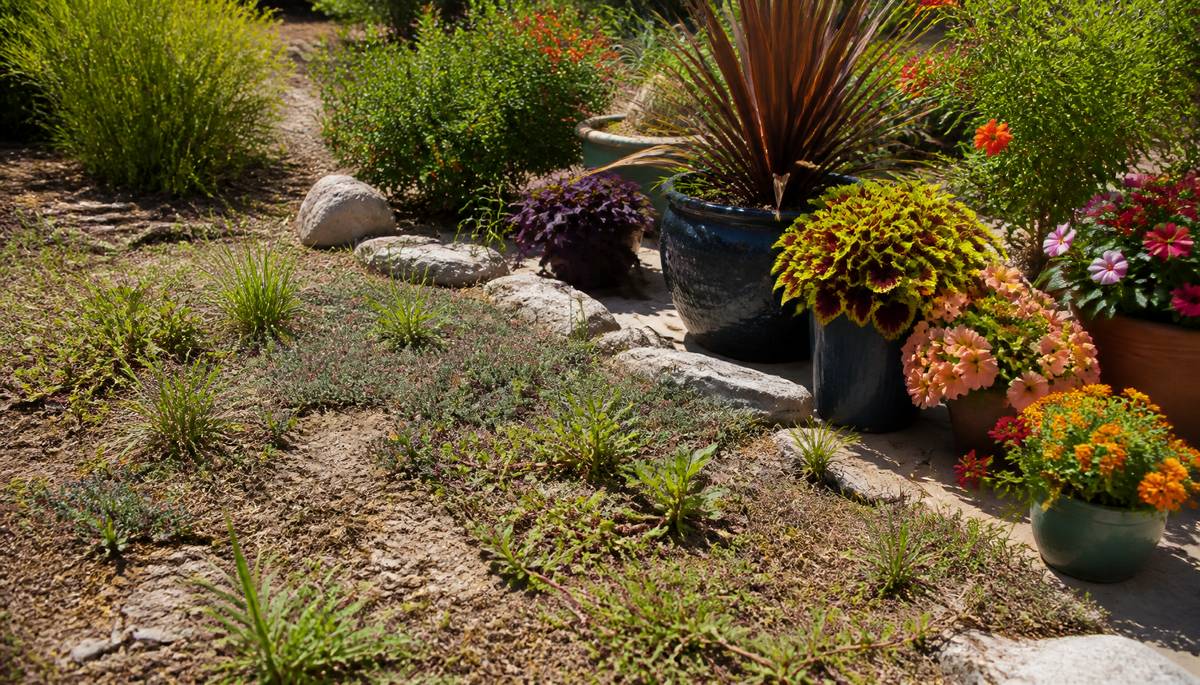 Drought has a talent for exposing every weak point in a garden, rather like a very judgemental auditor with a fondness for dust. Creeping thyme had once knitted the gaps between the beds into a low, fragrant carpet. Then came a hard dry spell, and much of it simply gave up. Perennial plants, it turns out, are committed, not indestructible.
That dieback created bare patches, and bare soil is basically an open invitation with snacks. In rushed spurge, portulaca and crab grass, all of them opportunists with the social grace of gatecrashers. So the thyme did not become invasive; the drought removed enough of it for actual weeds to stage a takeover.
Elsewhere, drought has been less of a villain. Mediterranean-style planting in containers can still look strong, especially with regular deadheading and a reliance on bold foliage. Coleus, bronze sweet potato vine, New Zealand flax, ponytail palm and bloodleaf can carry a display, backed up by fancy-leaf geraniums, crotons, cannas and smooth yuccas. Add petunias, begonias, marigolds, zinnias, mandevilla and geraniums, and the result stays lush even in a tough season. Oleander and dwarf pomegranates also earn their keep, with orange flowers and tiny fruits.
As for the weeds, the least glamorous answer is still the best one: dig them out by hand. Tedious, yes. Effective, also yes. Replant the thyme once cooler weather returns, and keep the interlopers from settling in again.
Posted on 5 September 2026
Why Do Raised Beds Make Tiny Kitchen Gardens Feel Strangely Effortless?
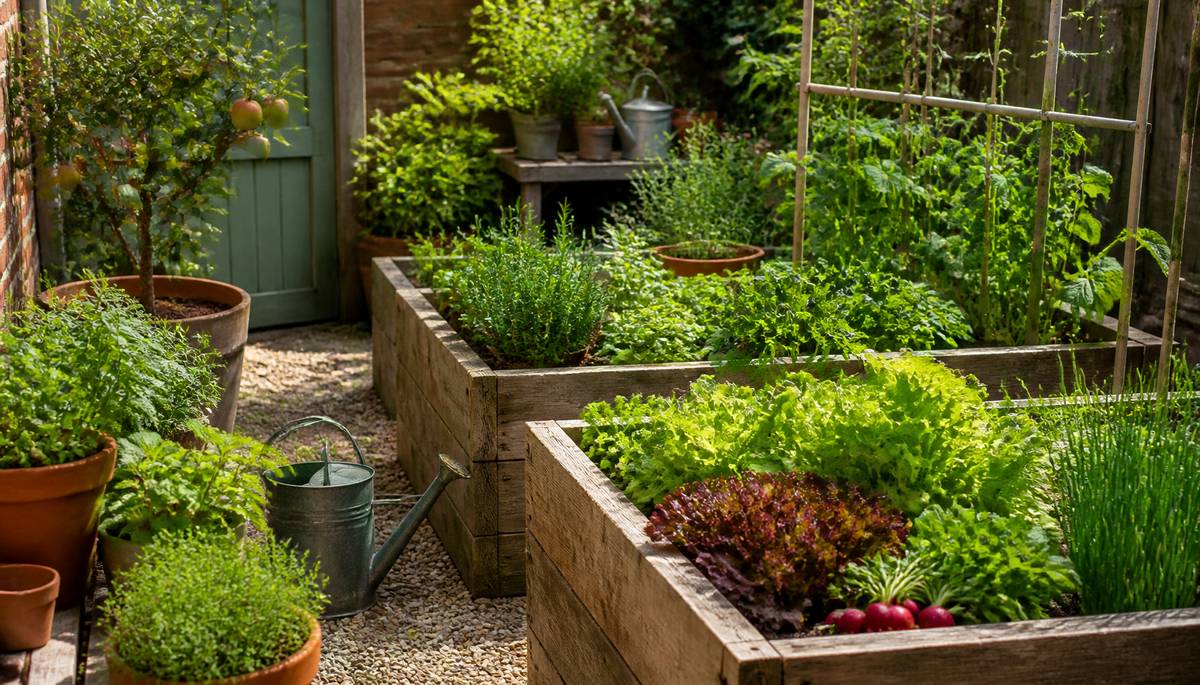 Raised beds make a tiny kitchen garden feel less like land management and more like cooking with ingredients laid out in sensible little stations. That, really, is the trick. A small plot stops seeming chaotic once it has edges.
Those edges do a lot of quiet work. They turn a patch of garden into clear, manageable sections, so sowing, weeding and picking become simpler, quicker jobs rather than vague weekend intentions. One bed for salad leaves and radishes, another for beans or courgettes, perhaps a third for herbs you use constantly: basil, parsley, mint, rosemary, chives. Suddenly the whole thing feels organised, and organisation is suspiciously close to ease.
Raised beds also suit the sort of modest spaces where kitchen gardens now thrive. You do not need a grand estate. Pots by the back door can keep herbs within arm’s reach, and they can be moved if the sun shifts or the weather turns awkward. Compact fruit trees, including apple, pear and plum, can earn their keep in smaller gardens, while strawberries and other soft fruits are perfectly happy in containers or a dedicated bed.
The secret, if there is one, is not ambition but restraint. Start with what you actually eat. Lettuce is wonderful; seventeen unwanted lettuces are a moral lesson. Build gradually, learn your conditions, and a productive corner becomes part pantry, part pleasure.
Posted on 31 August 2026
The Most Overlooked Wildlife Upgrade Is Not Flowers - It's Mess
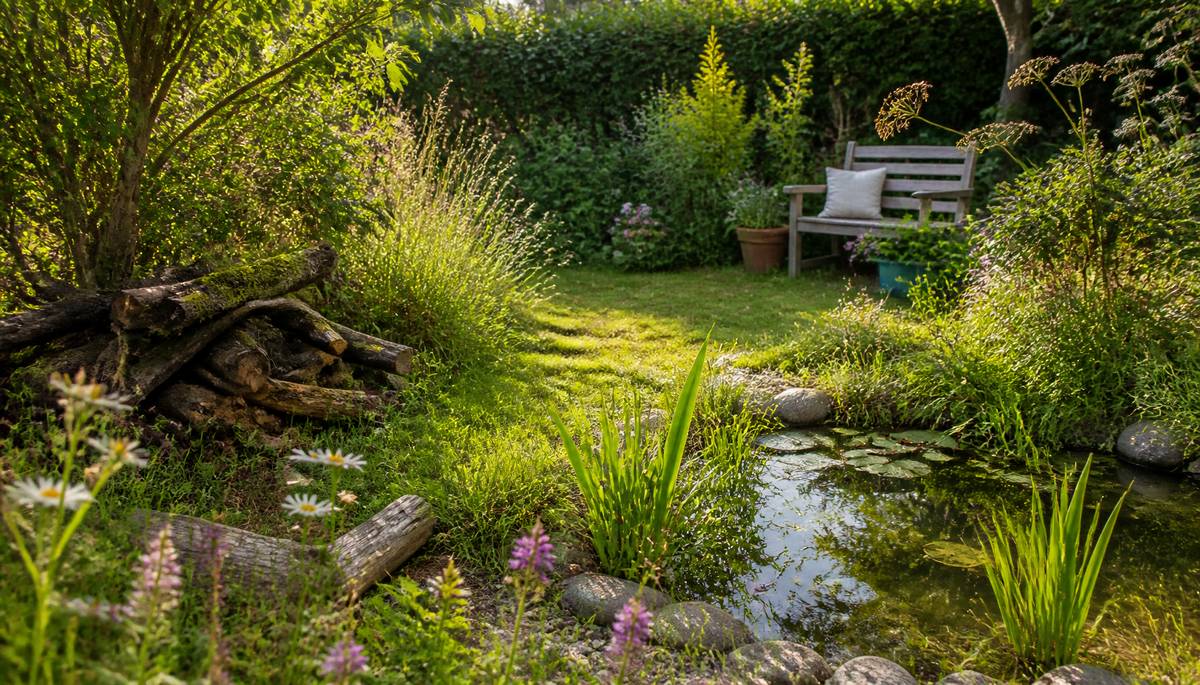 The best thing you can do for wildlife is also the thing that makes some people twitchy: stop tidying every square inch like the garden is expecting a royal inspection.
Flowers matter, obviously. Nectar-rich blooms feed bees, butterflies and other pollinators. Berrying shrubs help birds later in the year, and plants left to hold their seed heads become a snack bar instead of a waste-disposal problem. But the real upgrade is structure. Shelter. Places to hide, nest, crawl under and generally conduct tiny creature business.
That means longer grass in one patch, a heap of fallen leaves in another, and a log pile you resist “sorting out” for months. Mixed hedges do more than a hard fence ever will, giving birds cover and nesting space while creating safer routes through the garden.
And if you can squeeze in a pond, even a small one, do it. Water pulls in insects, birds and amphibians fast, and native aquatic plants help it feel like part of the garden rather than a lonely ornamental puddle. One frog may then act like he pays the mortgage.
This does not mean surrendering the place to chaos. You can still have neat seating areas, proper paths and a lawn that isn’t plotting against you. The point is balance: a garden that looks good, works for you, and quietly joins the wider patchwork of habitat beyond the fence.
Posted on 25 August 2026
Why Do So Many Gardens Die The Moment Summer Ends?
 Most gardens don’t die in autumn. They get exposed.
Summer is flattering. Flowers are loud, borders are full, and almost anything looks successful for a few bright weeks. Then the heat drops, leaves fall, and the garden shows what it’s really made of. If everything collapses the moment September slips away, the problem usually isn’t the season. It’s the planning.
A garden with staying power is built across the whole year. Spring bulbs earn their keep early, before perennials and flowering shrubs take over. Later, autumn foliage, berries and seed heads keep the show going long after the obvious blooms have finished.
Then winter arrives and structure matters more than colour. Evergreen shrubs, hedges and well-placed trees stop a space looking stripped bare. They give shape, shelter and something solid to look at when deciduous plants have dropped their leaves. Even the foliage does work here, with different greens and textures carrying more weight than flowers.
Ornamental grasses are useful too. In summer they soften edges and catch the breeze. By autumn many turn bronze or gold, and if you leave the dry stems standing through winter, frost can turn them into sculpture.
Even paving, walls, pots and seating pull their weight. A good garden is not one perfect moment. It changes, and still gives you something worth seeing in every season.
Posted on 18 August 2026
Stop Fighting Your Garden's Native Conditions
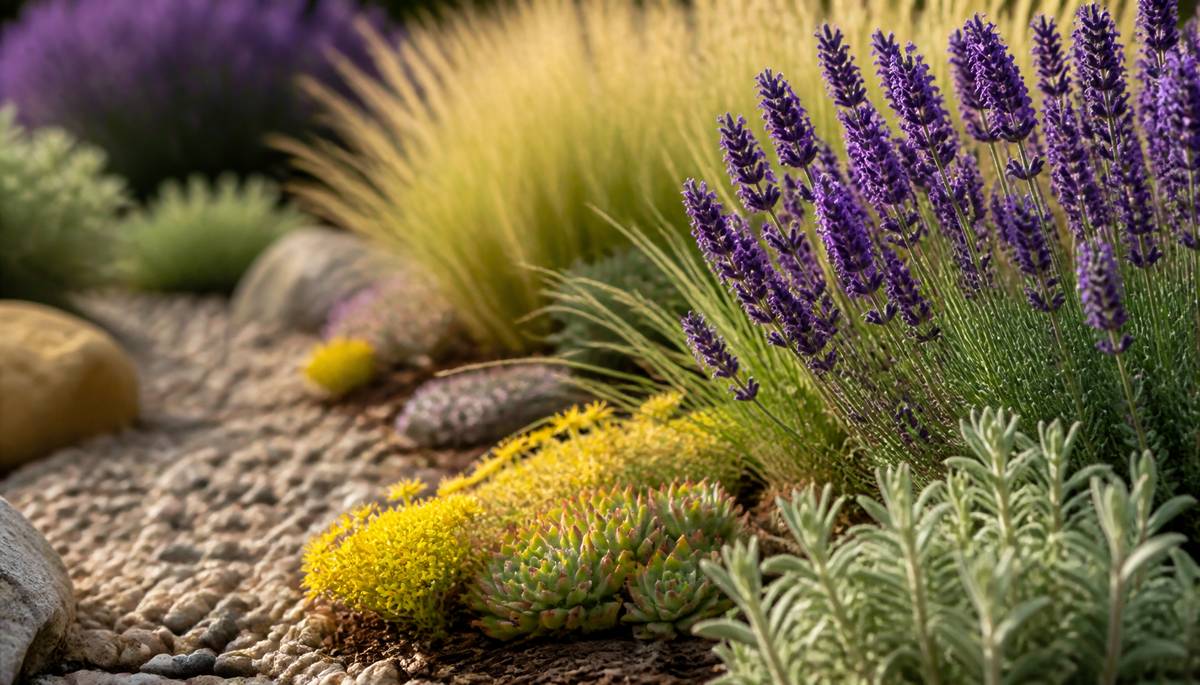 Some gardens behave like old gangsters: they don’t respond well to threats. If your plot is dry, windy, shady or stony, the smart move is to stop arguing with it and start planting for what’s already there.
That is the real trick behind a low-maintenance garden. Not a wasteland of paving, but a space that looks good without stealing every weekend. The biggest win comes from plant choice. Drought-tolerant plants such as lavender, sedum, ornamental grasses and many Mediterranean varieties can cope with less watering once established, provided your soil and climate suit them. Put a sun-lover in deep shade and you’ll spend months coaxing, apologising and replacing.
Bare soil is another mug’s game. Leave it open and weeds move in like they own the deeds. Ground-cover plants help fill the gaps, while bark, gravel and wood chip mulches shut out light, slow weed growth and hold moisture in the soil. That means less hoeing and fewer trips with the watering can.
Design does its share too. Vast lawns, fiddly borders and scattered planting pockets create mowing, edging and pruning jobs you never asked for. Keep beds clear, paths easy to reach and planting repeated in broader groups. It looks calmer and it cuts the workload.
A good garden should feel lived in, not hard labour.
Posted on 13 August 2026
How A False Gardening Panic Exposed The Real Residential Zoning Battle
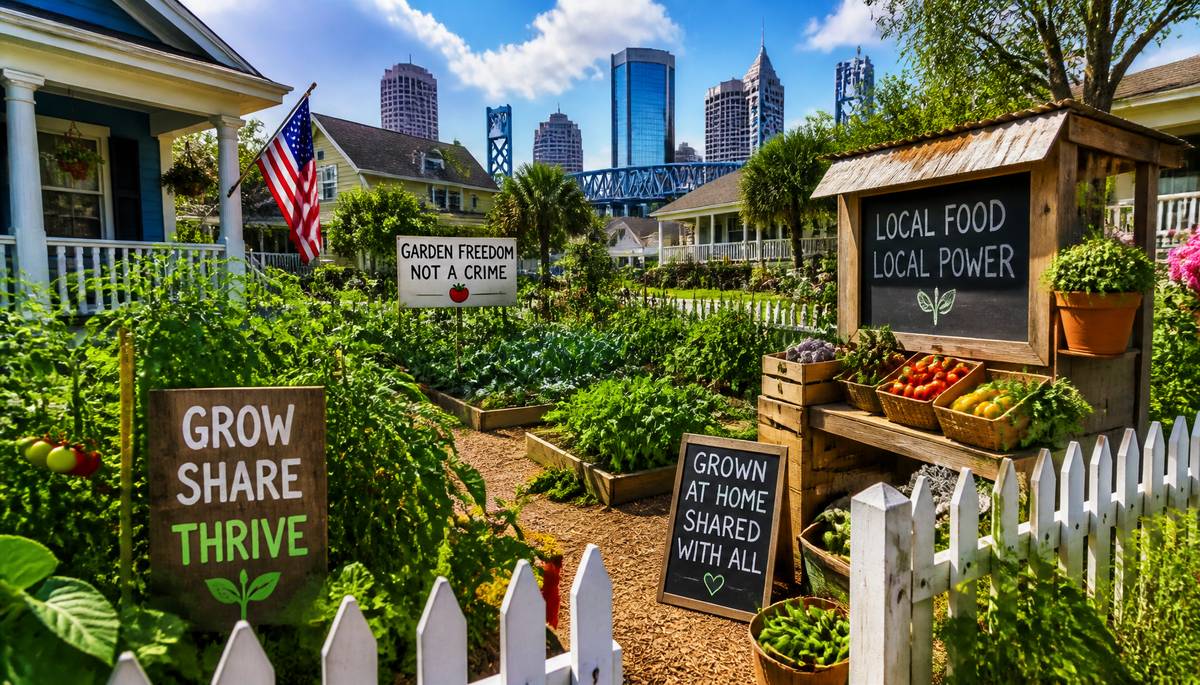 For a moment, Jacksonville managed to convince people of something wonderfully bleak: that you could live on your own land and still be treated like a criminal for growing a tomato.
Except that is not what the rules say.
The city has now made clear that residents in Duval County are already allowed to grow food on their property. Homeowners can do it. People gardening at their residence can do it. Owners of vacant plots can do it too. In fact, the city says growing food is permitted as of right, regardless of zoning or land use.
So why did this turn into a public panic? Because the real argument was never simply about growing food. It was about selling it.
Jacksonville says the confusion comes from a zoning split: in residential areas, people may grow produce on site, but selling what they grow there is not automatically allowed. In commercial zones, both growing and selling are generally permitted.
That distinction matters. A back garden full of okra is one thing. A front-drive farm stall is another, at least in planning terms.
Residents have been pushing a “Free to Garden” style proposal after speaking at council meetings about the right not just to grow, but also to share, exchange and sell produce from home without zoning limits. The city says it is now drafting legislation to respond.
Which rather neatly reveals the truth: this was never a war on gardening. It was a zoning row wearing a straw hat. Posted on 8 August 2026
The Garden Center Scam: When Showy Blooms Create A Food Desert
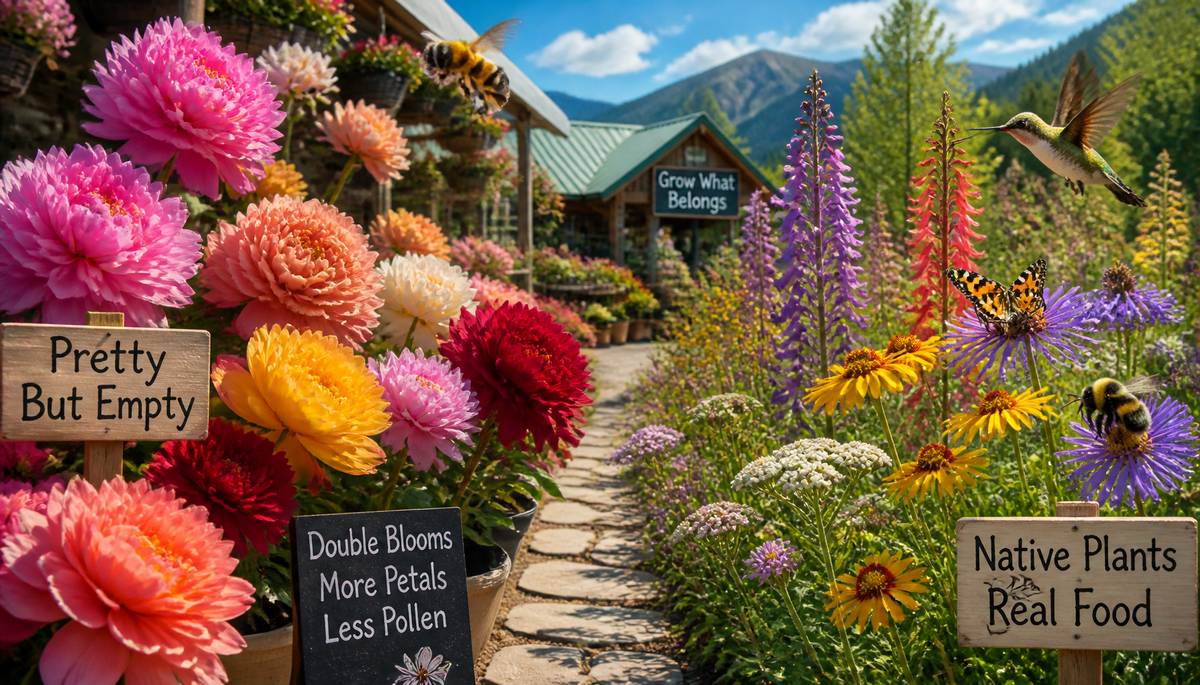 Garden centres know exactly how to seduce us: giant blooms, improbable colours, petals piled up like a dessert wearing a hat. We see spectacle. A bee sees an empty fridge.
That matters, especially in places like Routt County, where people rightly want to support bees, butterflies, moths, hummingbirds and the other small workers holding ecosystems together. The awkward truth is that not every flower is useful. Some ornamentals are bred to impress humans first, with little nectar or poor-quality pollen for the insects they attract.
The biggest offenders are often double flowers. All those extra petals may look plush, but they frequently replace the parts that actually feed pollinators. Lovely for us. Maddening for them.
Native plants are a different story. Colorado species such as penstemon, blanketflower, rabbitbrush, yarrow, asters and Rocky Mountain bee plant developed alongside native pollinators over thousands of years. That shared history matters: flower shape, bloom time, pollen quality and nectar access all line up. Some native bees are so specialised they rely on only a narrow range of plants. Swap that habitat for decorative bedding alone and you can create a food desert.
This is not a call to ban every non-native bloom. Lavender, oregano, catmint and borage can all earn their keep. The point is function. A good garden should still be beautiful, but it should also feed life, support birds and caterpillars, conserve water, and actually belong to its landscape.
Posted on 1 August 2026
The Secret To Year-Round Pollinator Traffic Is Bloom Timing
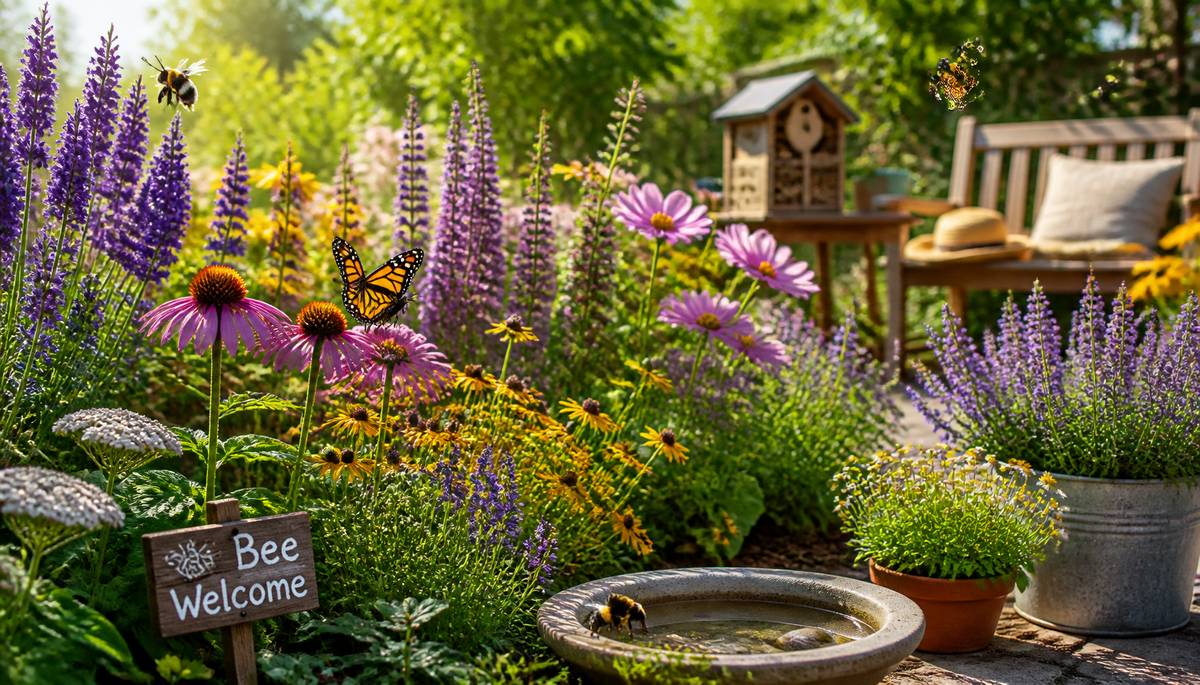 A pollinator garden that flowers brilliantly for three weeks and then gives up is rather like opening a café for bees and locking the door just as the lunch crowd arrives. Bloom timing is the trick. If something is flowering from early spring to late autumn, pollinators are far more likely to keep returning.
That means planting for succession, not spectacle alone. Early blossoms help bees when food is scarce. Summer brings the heavy traffic. Late flowers matter just as much, feeding insects before colder weather slows everything down. A mix of flower shapes and colours also helps, since different pollinators are built for different jobs.
Lavender, salvia, echinacea, cosmos and native wildflowers are all useful choices because they offer nectar and pollen across the season. Flowering herbs earn their keep too. Even a few well-chosen containers on a balcony or patio can support bees, butterflies and other beneficial insects.
The rest is common sense, though uncommon in practice. Go easy on chemical pesticides, because they do not reliably distinguish between pests and the creatures doing useful work. Add a shallow dish of water. Leave a small patch a bit untidy for shelter. The result is not merely better for biodiversity. It is livelier, more colourful and much more interesting to sit beside.
Posted on 25 July 2026
The Wild Truth: New Coneflower Hybrids Keep Losing to the Original
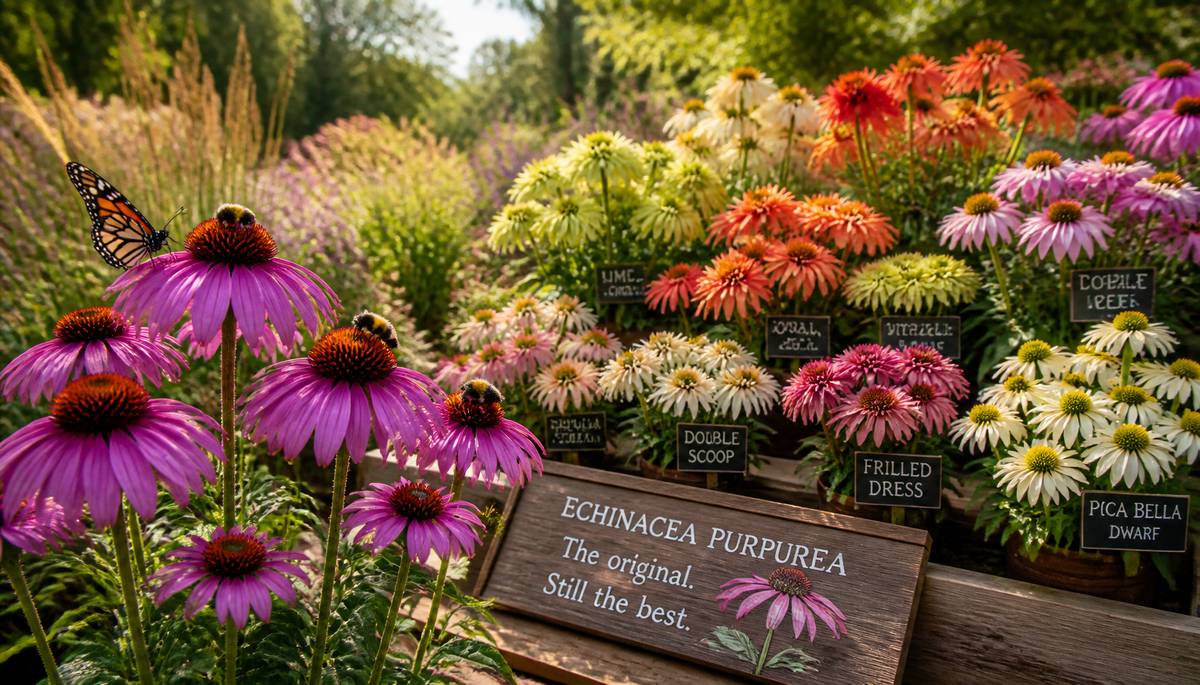 Garden centres now present coneflowers as if they were auditioning for a costume drama: lime, coral, cream, doubled, frilled, dwarf, improbably neat. Yet the old purple one keeps quietly winning.
Echinacea is a North American genus of nine species, with three native to Illinois: Echinacea purpurea, E. pallida and E. simulata. Of these, purple coneflower remains the benchmark. It flowers for ages, stands up well in ordinary gardens, and its coarse leaves and stout blooms sit beautifully against finer grasses.
The trouble with many newer hybrids is not that they are ugly. Some are striking. It is that they are often bred to satisfy us, not insects. A coneflower’s central cone is made of many tiny disc florets, and those are the bits that provide pollen and nectar. The coloured “petals” are ray flowers, there to attract attention. Double forms increase those petal-like rays while reducing the useful disc florets, which can make them poorer feeding stations for pollinators.
Breeders have also chased shorter stems, tighter habits, more branching and a longer or flashier display. Fair enough: wild coneflowers can flop when garden conditions are kinder than the prairie. But improved form does not always mean improved performance.
Trials at Mt Cuba Center found the straight purple species was among the most pollinator-friendly and garden-worthy, beaten only by the white cultivar ‘Fragrant Angel’. Sometimes the original is not quaint. It is simply better.
Posted on 16 July 2026
Not Edible, Still Extraordinary: The Banana Bloom That Shouldn't Exist Here
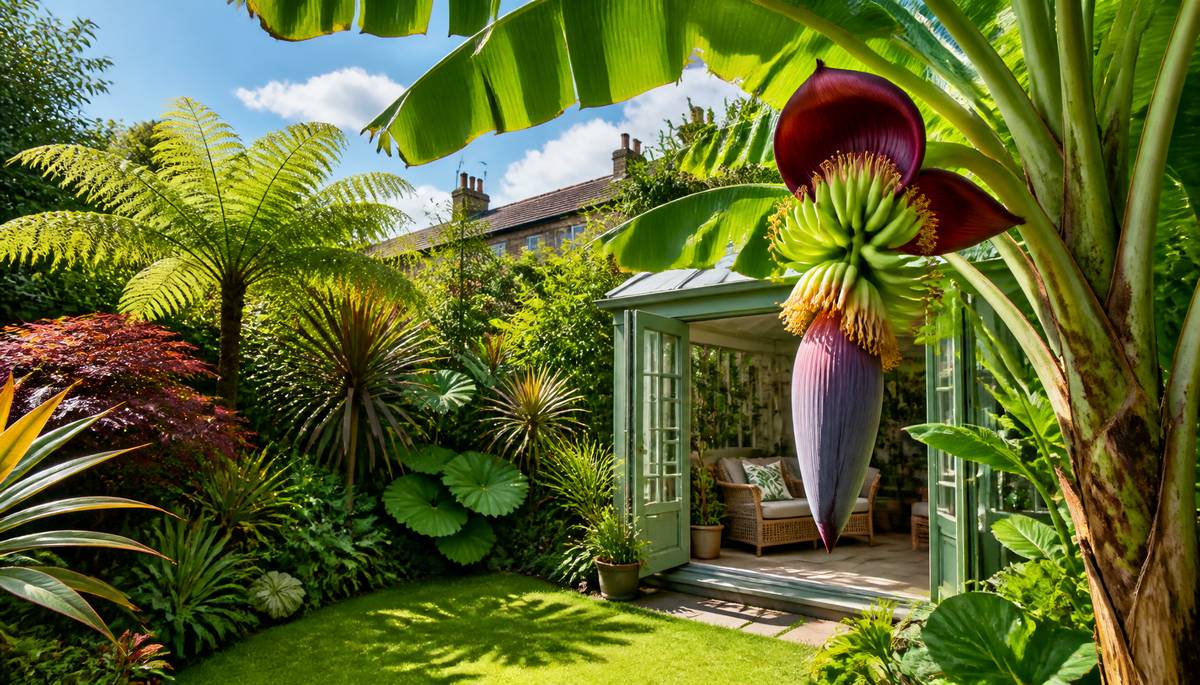 Wakefield is supposed to belong to rhubarb. Bananas, by rights, should keep to themselves. And yet in Wrenthorpe, Dave Iveson has coaxed a banana plant into flower, which in this part of West Yorkshire counts as a small botanical upset.
Over six years, Iveson turned an ordinary lawn into a lush, heat-seeking corner of the world, packed with tree ferns, cordylines, a Japanese acer and a Chinese rice-paper plant. The aim, he says, is simple: to open the door each morning and feel, briefly, elsewhere. Calm follows.
The real coup is the bloom. He has grown banana plants for 12 years and had never seen one flower until this summer. By his reckoning, it is a rare event locally, and the Royal Horticultural Society backs that up: most bananas in the UK will not flower or fruit outside, unless they are pampered in a conservatory or heated greenhouse. In very mild areas, or after a long hot summer, they sometimes manage it.
These are not supermarket bananas, he is quick to point out. The plant may go on producing more fruiting growth, but not the kind for your cereal.
At York Gate Garden near Leeds, head gardener Jack Ogg says their own banana was killed back by winter frost. That makes Iveson’s flowering specimen all the more striking. It also says something plain about the weather: warmer conditions are letting gardeners in Yorkshire try plants that once had no business being there.
Posted on 14 July 2026
Why July Rain Can Secretly Starve Your Garden
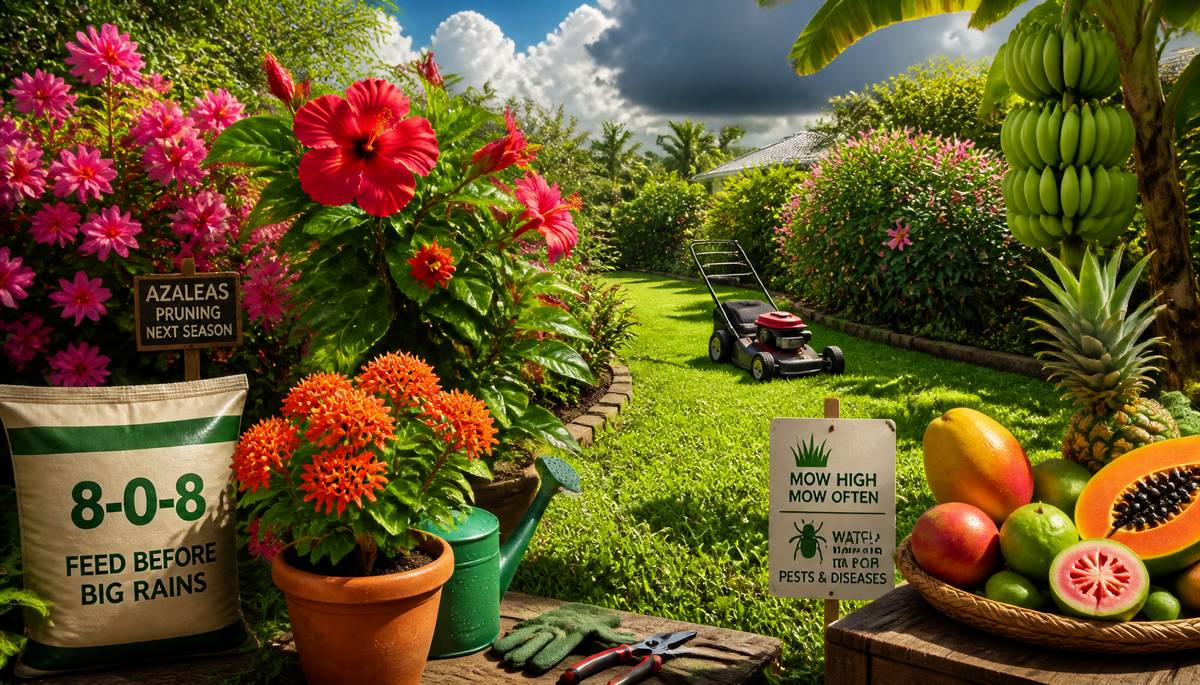 July looks generous: heat, thunder, eight inches of rain, the lot. But all that water can behave like a charming thief, sluicing nutrients straight through sandy soil and leaving plants pale, tired and quietly hungry. If annuals or shrubs start yellowing, iron often helps restore their colour.
Resist the urge to fuss over everything. Azaleas should already have been fed by late spring, and pruning them now means sacrificing next year’s flowers. Hibiscus and ixora, meanwhile, adore the season but still need sense rather than sympathy: feed before the big rains with something like 8-0-8, then stop watering or feeding if they’ve been sitting in soggy ground. Let them dry out first. This is also a good moment to cut back hibiscus, ixora and oleander.
Lawns are where optimism goes to die. Don’t fertilise St Augustine in July, and Bahia wants very little. Mow high, mow often, and never remove more than a third of the blade; longer grass makes deeper roots. Summer pests and diseases are busy now too, especially on stressed lawns, so keep an eye out for chinch bugs, mole crickets, webworms and fungal trouble.
Fruit trees, bananas and July-ripening crops such as mango, guava, papaya and pineapple do well now. Just keep fertiliser away from trunks, unless bark burn appeals to you as a gardening hobby.
Posted on 8 July 2026
Six Shade Annuals Still Worth Planting in July
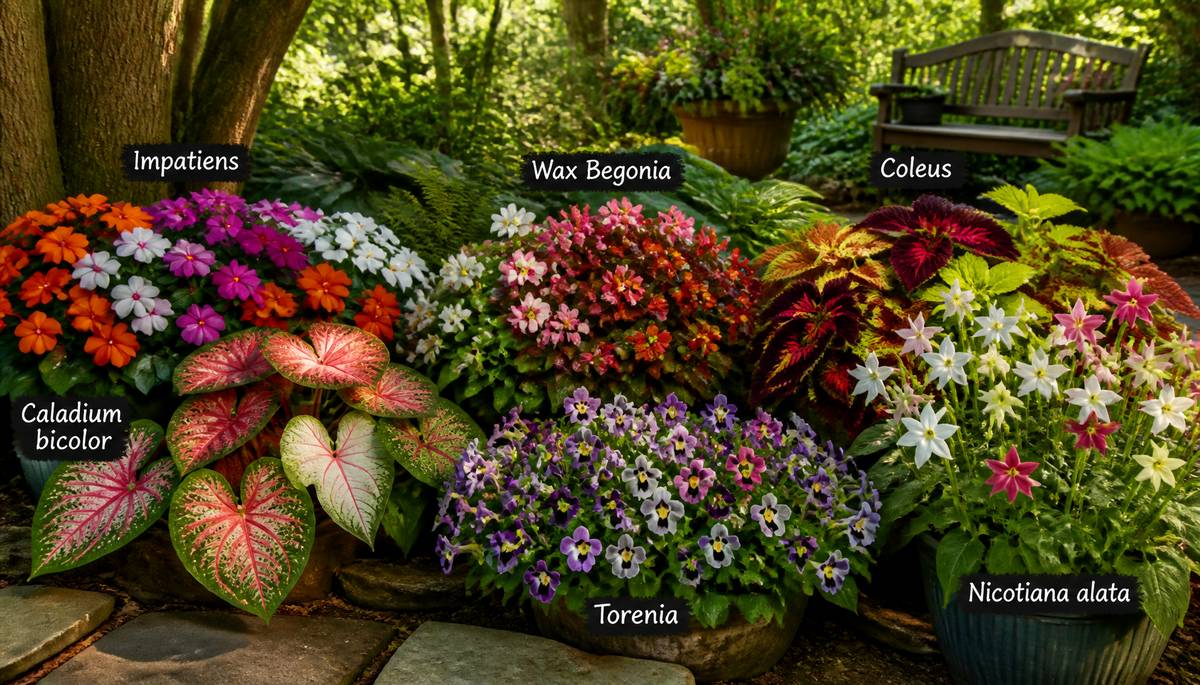 July is not the closing door gardeners fear. In shade, midsummer can be a beginning: soil is warm, roots settle fast, and several annuals are still ready to light the dim places.
Damon Abdi of the Louisiana State University AgCenter and Tabar Gifford of American Meadows point to six dependable choices. Impatiens remain a staple for shaded beds and pots, with five-petaled blooms in orange, pink, purple, red, and white set against serrated green leaves.
Wax begonia, Begonia semperflorens, keeps flowering through the hottest stretch and often right up to frost. Its glossy green or bronze foliage and white, pink, or red clusters stay tidy in containers, borders, and foundation plantings.
For color without relying on blossoms, coleus offers leaves splashed with burgundy, lime, copper, chartreuse, deep red, hot pink, and near-black, sometimes all at once. Removing flower stalks and pinching tips helps plants stay fuller.
Caladium bicolor brings heart-shaped leaves veined and washed in pink, purple, green, and white. Usually about 2 feet tall and wide, it suits low accents in beds or containers, though many parts are poisonous to people and pets.
Torenia, or wishbone flower, bears trumpet blooms in purple, blue, lavender, and pink, often with contrasting throats. Its fused anthers give it the name. It mounds neatly and flowers without deadheading.
Nicotiana alata adds height, large leaves, and evening fragrance. In warm soil, flowering tobacco establishes quickly and by late summer fills patios with white, blush, rose, and soft red starry blooms. Posted on 3 July 2026
Five Under-the-Radar Gardening Tools That Make Beginners Look Weirdly Competent
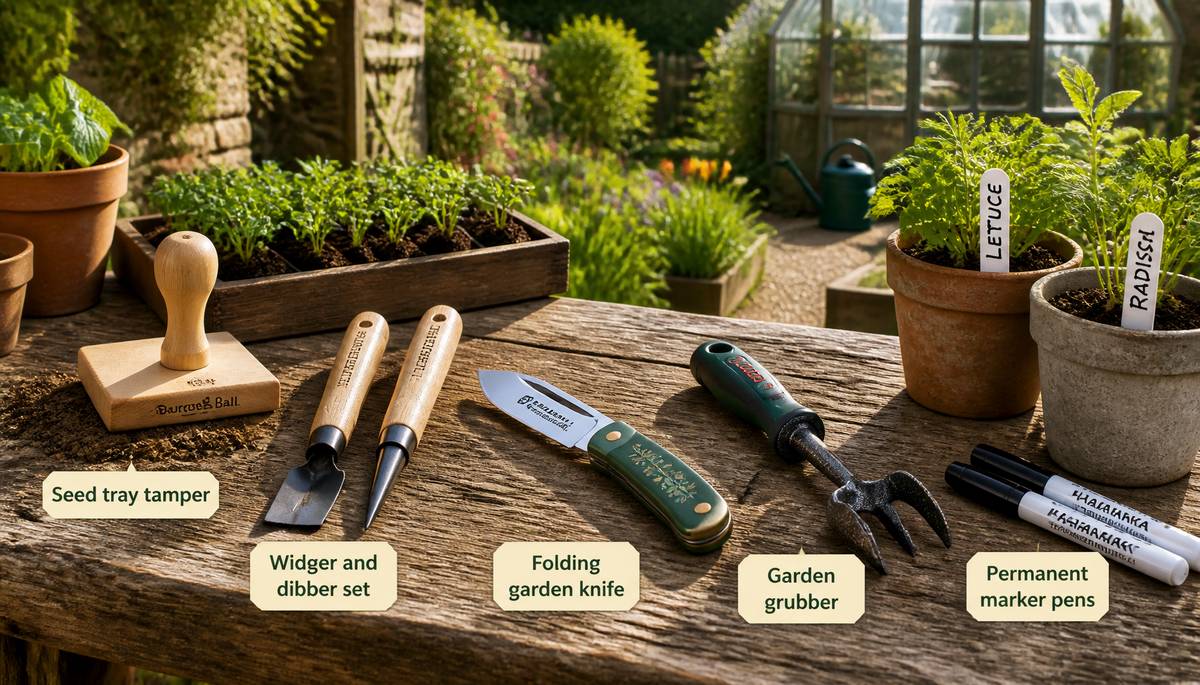 Beginner gardening has a charming way of convincing you that a spade, a rake and some secateurs will cover everything—rather like assuming a Swiss Army knife can also perform minor dentistry. In reality, a few oddly specific tools can save time, hands, and what remains of your patience in June.
Gardener Chloe Plumstead highlights five especially useful ones. First: a tamper, which presses soil into a level surface and is particularly helpful for seeds that need surface sowing. A Burgon & Ball wooden seed tray tamper in beech wood is listed at £10.69 on Amazon.
For raising plants from seed, a widger and dibber are the low-key heroes. The widger lifts seedlings neatly from trays; the dibber helps when potting on, especially with long roots. A Simply Garden widger and dibber set costs £4.99 at Amazon.
A garden knife earns its keep in multiple ways: pruning, cutting twine, and opening mulch or compost bags. The Spear & Jackson Kew Gardens Collection folding garden knife is £9.93 at Amazon.
Weeding gets easier with either a grubber or a hand rake. One loosens soil, the other catches weeds for removal. A Bosch garden grubber is priced at £15 on Amazon.
Finally, permanent markers matter more than they sound. Faded labels can turn a veg patch into botanical guesswork. A six-pack of black and white Haisanka permanent marker pens is £5.99 at Amazon.
Posted on 30 June 2026
Seven Self-Seeding Flowers That Build a Cottage Garden Almost by Themselves
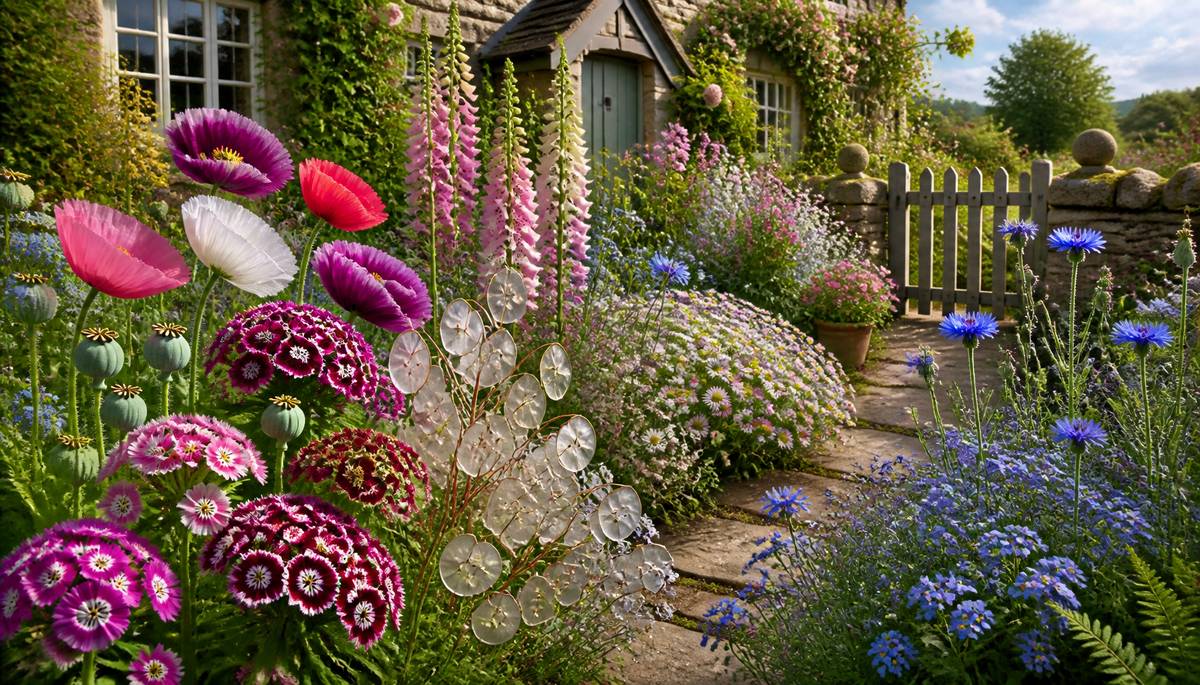 An English-style cottage garden always looks a little self-invented, as if the flowers made a private arrangement while no one was watching. The practical mechanism behind that romance is simple: self-seeding plants drop seed, vanish, and then reappear in altered positions the next season, softening borders and colonizing gaps with minimal intervention.
A gardener in Surrey, United Kingdom, recently highlighted seven especially reliable choices for building that layered, old-world effect.
Breadseed poppies are among the essentials: tissue-thin blooms in pink, purple, white, and crimson give way to ornamental pods that can be left to shed seed for the following summer. Sweet Williams, often treated as biennials, frequently reseed too, returning in clustered blooms from white and pink to dark burgundy, with fragrance as part of the bargain.
Honesty, or Lunaria annua, first offers purple or white flowers, then produces the silvered, translucent seed discs that made it famous. Erigeron karvinskianus threads itself into walls, steps, and gravel, flowering for months as its daisies age from white to pink.
Foxgloves provide vertical drama and feed pollinators, while new seedlings often appear in unexpectedly fitting places. Cornflowers bring intense blue and a meadow character, along with generous reseeding. Forget-me-nots knit everything together in spring with small blue flowers, filling spaces and creating the loose, layered abundance that keeps a cottage garden changing from year to year.
Posted on 20 June 2026
When Gardening Turns Into a Purity Contest
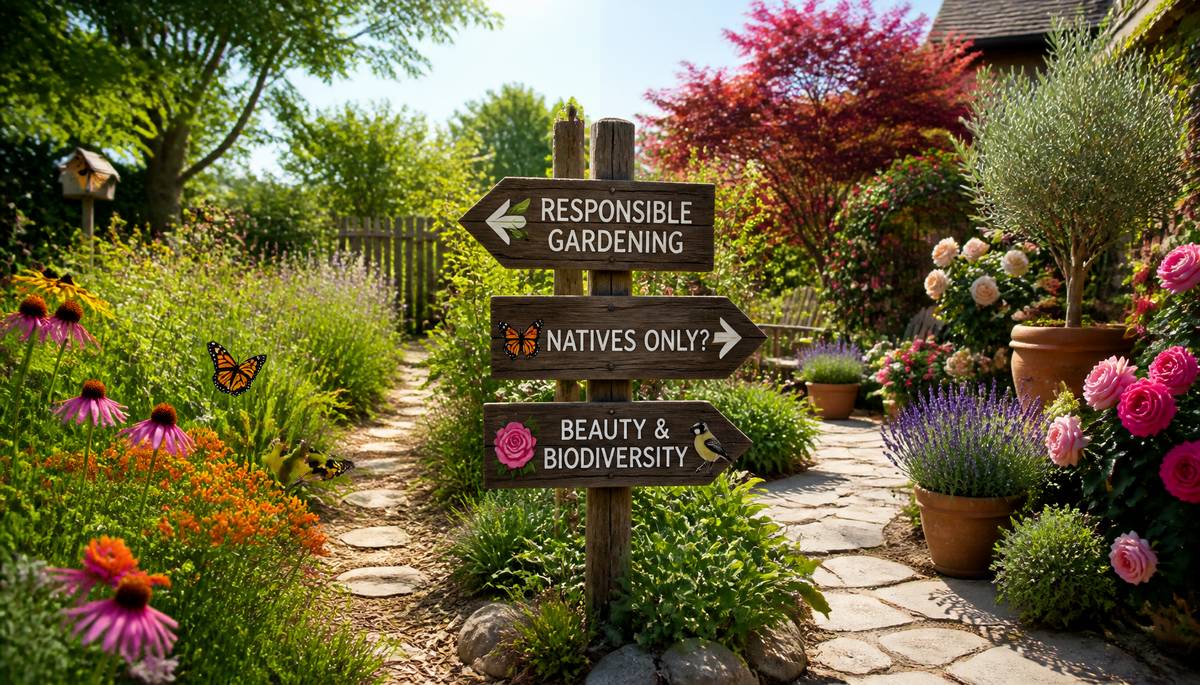 The native-plant push started as the most reasonable suggestion in the world: maybe think about what your yard is doing besides looking cute from the driveway. Local species usually do a better job feeding pollinators, supporting birds, and helping wildlife than imports shipped in like botanical tourists. That part is hard to argue with.
But every good idea has a final, terrifying form. In some gardening circles, consider native has mutated into natives only, as if planting lavender or tulips is the horticultural equivalent of rolling coal through a butterfly sanctuary. Gardeners who choose roses or other non-native ornamentals can end up treated like ecological vandals.
That jump skips over an obvious distinction. A plant that bulldozes an ecosystem is not the same thing as a non-native that stays politely in its lane. Plenty of imported ornamentals are non-invasive, offer nectar, survive rough conditions, and bring color or fragrance people actually want in their gardens.
And that matters, because a garden is not a wilderness preserve with a gift shop. It is a human-made space shaped by taste, memory, culture, food, and pleasure. A Japanese maple, an English rose, or a Mediterranean olive tree may do little for local ecology and still mean something real to the person growing it.
The sensible aim is responsible gardening, not a purity test that scares people away from the whole enterprise.
Posted on 9 June 2026
A Garden’s Conduct in a Season of Thirst
 With spring advancing toward summer, the gardener is invited to labor at the very hour nature grows parsimonious. More than 60 percent of the United States is now in drought, and a flourishing yard demands less enthusiasm than discipline.
Ed Olsen, consumer horticulture specialist and director of the Virginia Cooperative Extension Master Gardener Program, notes that planting in drought is possible, though hardly merciful to either plant or caretaker. It also depends on whether local rules restrict irrigation. A useful distinction must be kept in mind: a plant installed during a dry spell is not therefore a plant suited to live on little water. Even drought-tolerant kinds require steady watering through their first year, which is the season on which survival chiefly depends.
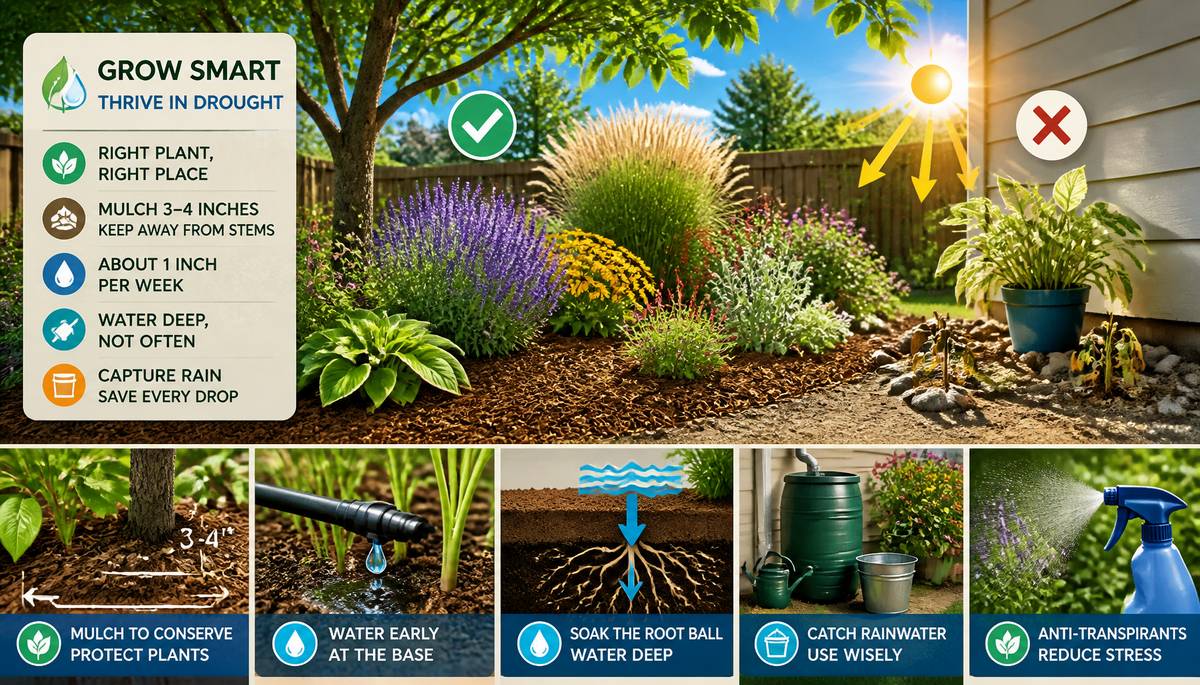
Success begins with the old maxim of right plant, right place. A shade plant set in full sun suffers doubly when moisture is scarce. Mulch is another great economist: 3 to 4 inches help cool soil, block sun at the surface, and preserve moisture, provided it is kept away from trunks and stems to avoid rot.
Most plants need about one inch of water each week in the growing season. In drought, the common folly is frequent, shallow watering. Better to water early, direct moisture at the base, avoid sprinklers that lose 20 to 30 percent by wind and evaporation, and soak the full root ball.
Containers benefit from grouping. Rain barrels and buckets can catch stormwater. Anti-transpirants may also reduce moisture loss during transplanting or severe summer heat. Even then, prolonged drought may still leave its mark.
Posted on 8 June 2026
Robot Minder for the Backyard Plot
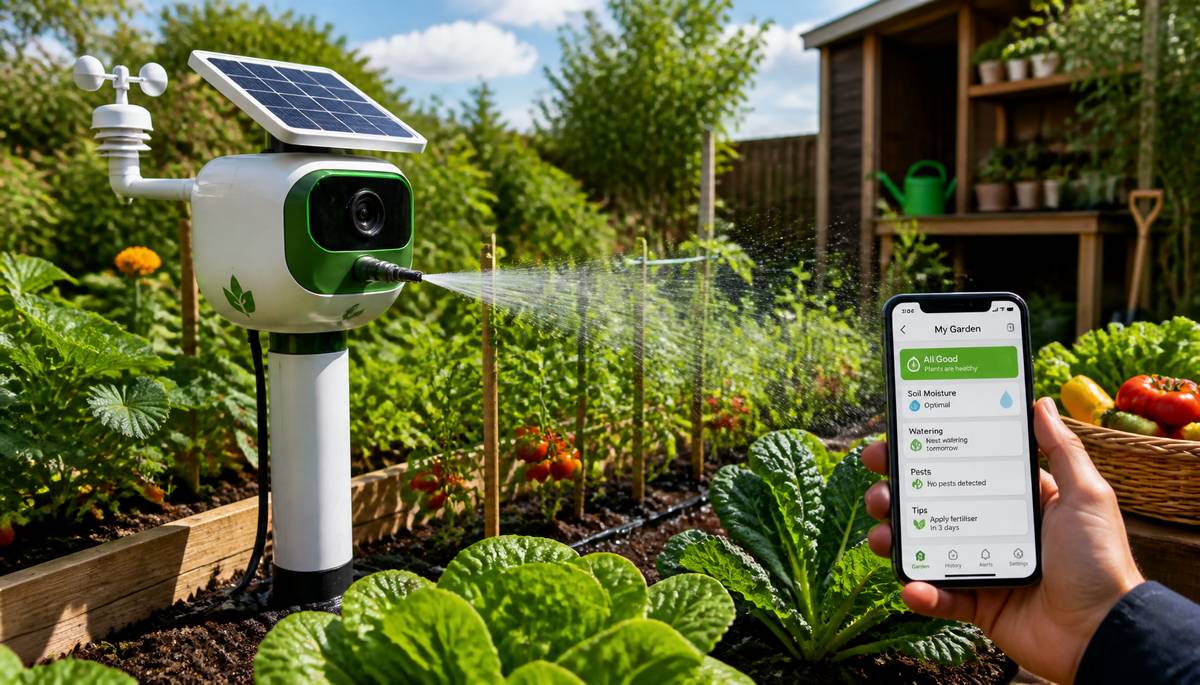 The vegetable patch, that old theatre of neglect, forgetfulness and marauding appetite, now has a sentry. GardenSpace, an Australian startup, has built a solar-powered robotic gardening unit designed to keep plants properly watered, watch their condition and drive off pests with a jet of water when its camera spots an intruder.
The device is static rather than roaming: a camera, WiFi link and water outlet housed in a rotating head, with a weather station and thermal sensor helping it survey soil, plant growth and overall health. It sends information to the owner, decides when watering is needed, and flags moments for fertiliser, leaf insect repellent and harvest.
One unit is meant to cover 100 square feet, or 9.3 square metres, which the company says can yield food crops worth more than $700 a year. The target market is obvious enough: Luke Worth, GardenSpace’s lead software engineer, noted at Sydney’s Tech23 event this week that one in two households in Australia and New Zealand grow at least some of their own vegetables.
Backed by HAX and SOSV, the company plans a Kickstarter launch on 17 October. The price is set at $US199, with consumables expected to cost about $US40 a month, and talks are under way with retailers including Bunnings. Deliveries are expected to begin in early 2018. The software, the company says, should improve as data from more gardens accumulates.
Posted on 2 June 2026
The Best Small-Space Edible Gardening Tip Is Going Dwarf
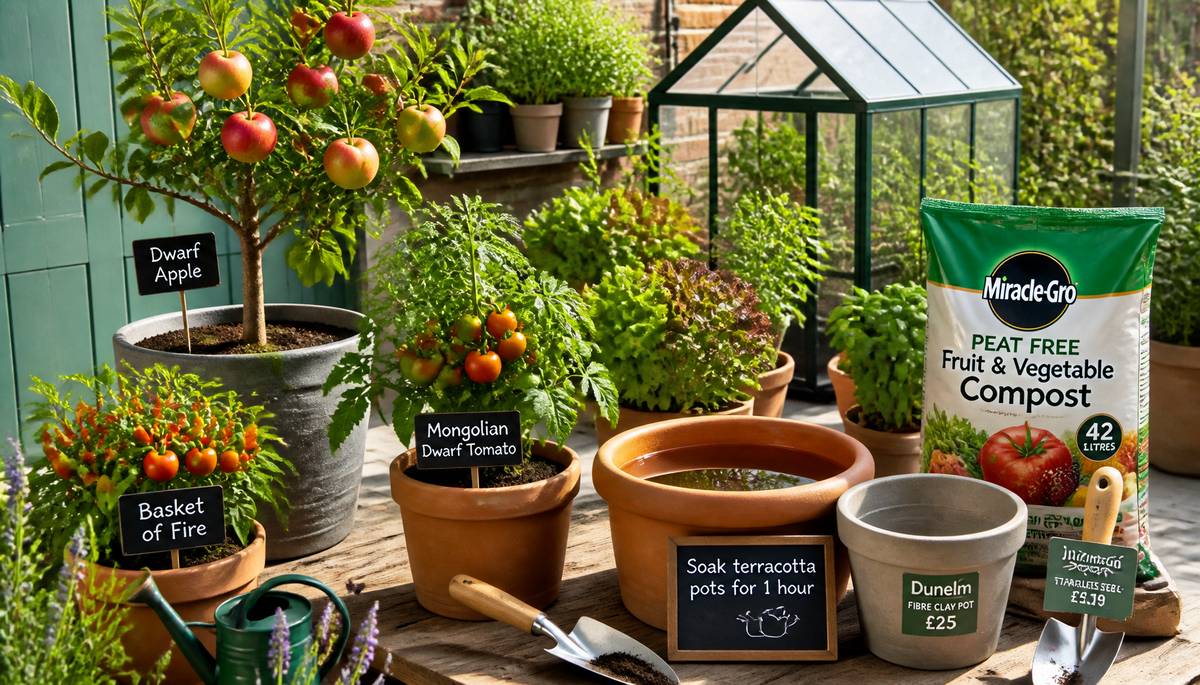 If you’ve only got a balcony, patio, or a wee patch the size of a bath mat, edible gardening can still be done brilliantly. The clever trick is choosing dwarf varieties: compact plants bred to crop heavily while keeping a root system that can cope with a restricted pot.
That was the standout lesson from a tour of organic kitchen gardener Rekha Mistry’s small-space setup this week. She plans to fill her front patio with food crops grown entirely in pots and containers, showing that even a tabletop can be enough for fruit, vegetables, and herbs. Her mini greenhouse helps, but a windowsill can do the job too.
The most useful example was a dwarf apple tree, started two years ago in the same pot and still thriving. Rekha’s point was simple: for containers, dwarf fruit and veg are the sensible choice. She also highlighted dwarf tomatoes, including Mongolian dwarf, as high-yield plants whose compact roots suit small pots. Once frost had passed in her area, those tender tomatoes were ready to move outside. She also grows chillies, including Basket of Fire, already fruiting despite the plant’s modest size.
Another practical tip: soak terracotta pots in water for an hour before planting. It stops the dry clay robbing moisture from fresh compost.
Useful buys mentioned included a Wilkinson Sword Stainless Steel Trowel at £5.19, a Dunelm fibre clay pot at £25, and Miracle-Gro peat-free fruit and vegetable compost, 42 litres, at £11.70. Posted on 1 June 2026
How Plants Endure Heat and What Gardens Can Learn
 When summer turns pitiless, people can retreat to a shaded porch or climb toward cooler mountain air. A plant has no such escape hatch. Fixed in place, it must survive the heat where it stands.
That survival depends on a set of defenses, some immediate, some written deep into its form by long adaptation. For gardeners, the useful lesson is simple: a landscape does better when we think from the plant’s side of the equation.
For many common species, the first line of defense is evaporative cooling. Water inside the leaf reaches the surface and exits through tiny openings called stomates. As that moisture evaporates, it lowers the temperature in and around the leaf, much the way sweating cools human skin. The process only works while the plant still has water to spend.
That is why steady irrigation matters in hot weather. Moisture in the soil must be available for roots to pull upward, replacing what is lost through evapotranspiration, the movement of water from soil, through plant tissues, and out into the air.
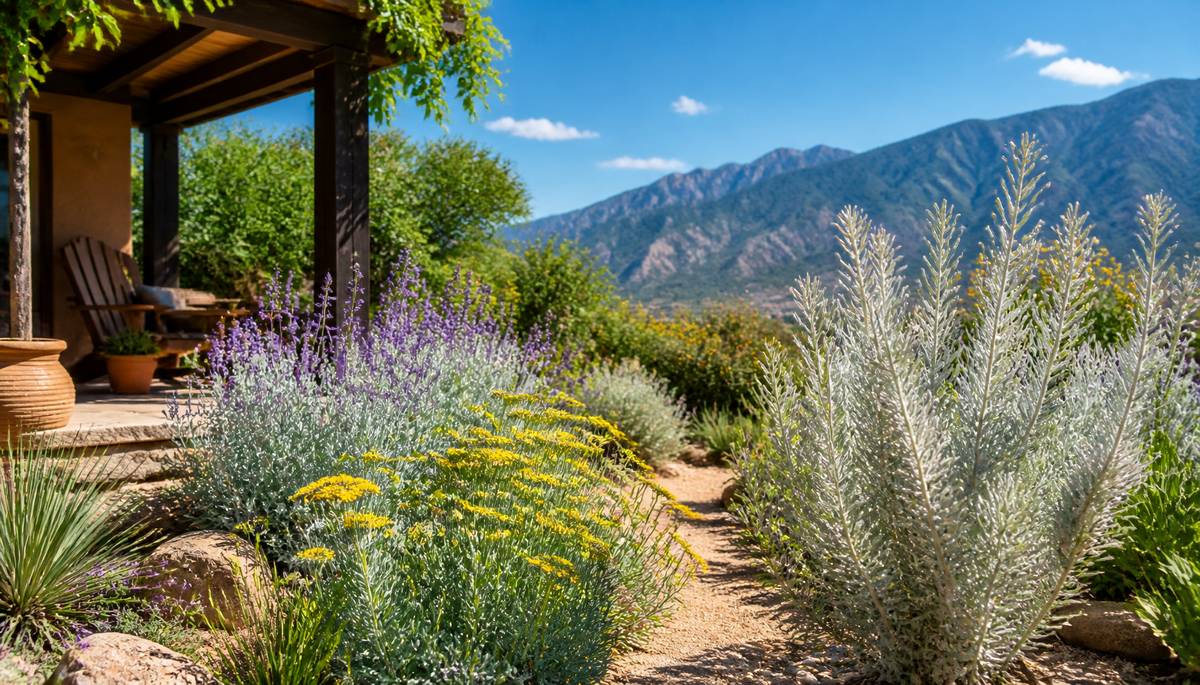
Heat-tolerant plants often reveal their history in their surfaces. Silver-gray foliage, seen in species such as native Sand Sage, Artemisia filifolia, reflects adaptation to punishing environments and can make a garden better suited to summer extremes.
Posted on 31 May 2026
The Garden’s Real Star Is Under Your Feet
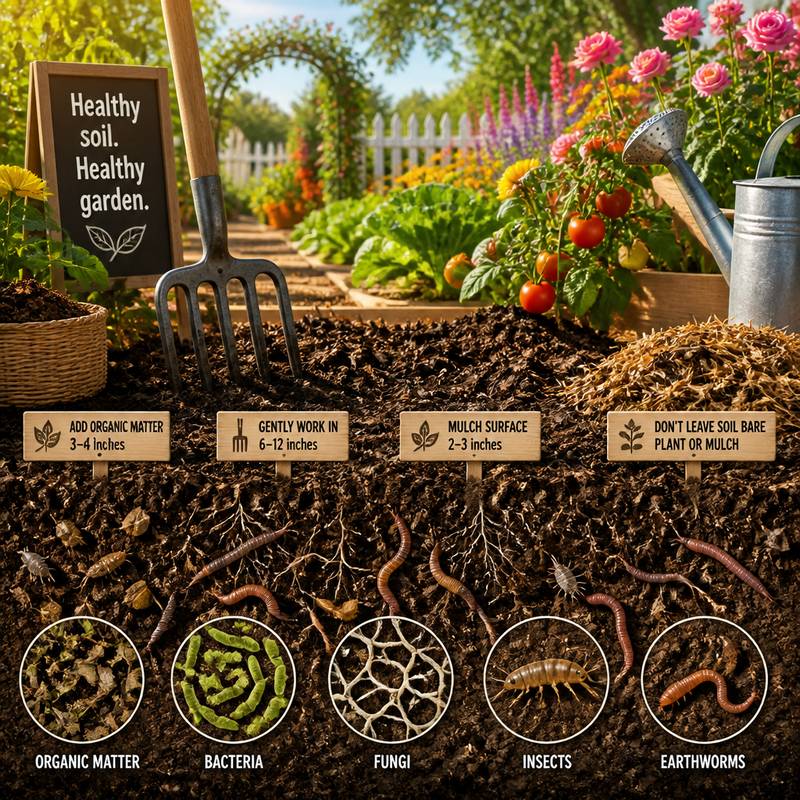 A glorious garden begins below the glamour. Before the roses preen and the tomatoes show off, everything depends on soil behaving less like lifeless dust and more like the crowded, astonishing ecosystem it is. Soil contains nutrients, organic matter, bacteria, fungi, insects and worms; a 2023 paper in the Proceedings of the National Academy of Sciences estimated it supports 59% of all life, making it Earth’s most biodiverse habitat.
That hidden workforce suppresses harmful organisms, turns decaying material into plant food, improves aeration and helps water move properly. So first, inspect texture. Sandy ground drains too fast; heavy clay clings to water. Either can be improved with 3-4 inches (8-10 centimeters) of compost, leaf mold or well-rotted manure, gently worked 6-12 inches (15-30 centimeters) down with a broad fork. Stop before it becomes powdery.
Too much tilling is a kind of vandalism: it damages microbes and earthworms, increases erosion, releases carbon, destroys air spaces, exposes buried weed seeds and pushes fertile topsoil downward. In later years, spread organic matter on top and let decomposition do the digging.
Test pH, too. Plants each prefer a particular range. Raise low pH with garden lime; lower high pH with elemental sulfur, following label directions. Check nitrogen, phosphorus and potassium as well. Build fertility gradually with compost and slow-release fertilizers, avoid compacting beds by walking on them, and never leave soil bare: plant it or mulch with 2-3 inches (5-8 centimeters) of undyed organic material, kept clear of stems and crowns.
Posted on 29 May 2026
The Garden Grift: Five Bad Fixes That Don’t Help Plants
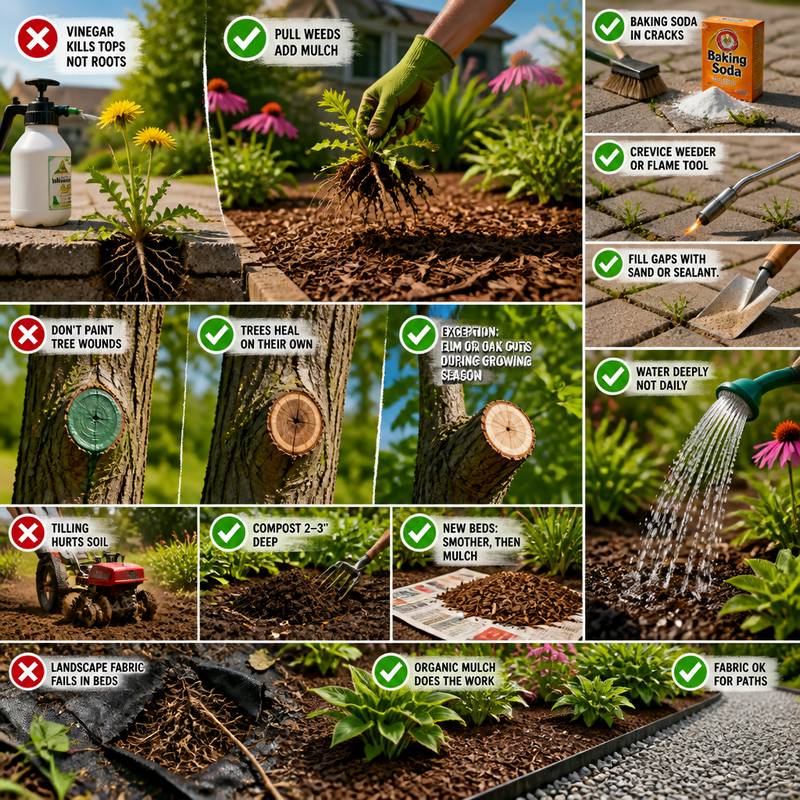 Every spring, the garden racket opens downtown: miracle tricks, kitchen-cabinet cures, tidy little lies dressed up as wisdom. Most of them leave the soil poorer and the gardener holding the bill.
Take vinegar. The household kind scorches weed tops and leaves the roots alive enough to laugh and come back. Stronger horticultural vinegar hits harder, but it can injure nearby plants, damage soil, and burn skin and eyes without gloves and goggles. In beds, the straight play is hand-pulling, then 3 to 4 inches of organic mulch. For weeds in paver cracks, baking soda on a dry, still day works; so do a crevice weeder or a careful propane flame tool. Finish by filling the gaps with sand or sealant.
Tree wound paint is another bum steer. Trees wall off injuries on their own. Sealants can trap moisture and pathogens and invite decay. The narrow exception: light sealants on elm or oak cuts made during the growing season to reduce Dutch elm disease and oak wilt. Better to prune correctly, and at the right season.
Annual tilling wrecks microbes, earthworms, fungal networks, structure, moisture retention, and stirs buried weed seeds awake. Compost spread 2 to 3 inches deep is better. For new beds, smother turf with newspaper or cardboard, then mulch or compost.
Skip daily sips of water. Deep, less frequent soaking builds deeper, tougher roots.
And landscape fabric under beds? It fails, tangles roots, blocks air and water, and sheds microplastics. Save it for gravel or stone paths. Organic mulch does the real work in beds. Posted on 27 May 2026
Gardening on the Edge of Thirst
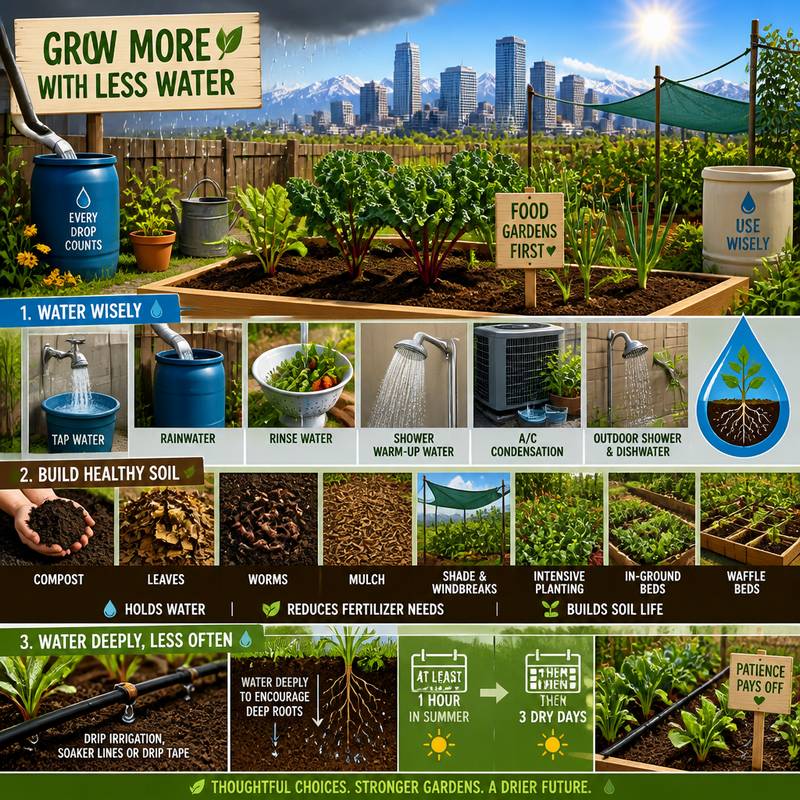 In Denver, a few stray drops fell while Heather Grady eased beet and kale seedlings, and onions, into dry ground on April 9, 2026. They were not enough. After a winter of meager snow across much of the U.S. West, reservoirs are low, rivers will run leaner, and cities are already tightening outdoor watering. Denver Water imposed restrictions on March 25, its earliest ever; Salt Lake City has asked residents to voluntarily conserve and requires government offices to do so; Los Angeles, Las Vegas and Albuquerque already live with seasonal rules.
Food gardens are usually still permitted, but the wiser lesson is how to grow them with less.
The first reckoning is with water itself: taps, rain barrels, rinse water from vegetables, shower warm-up water, even air-conditioner condensation caught beneath outdoor drainpipes. In Mesa, Arizona, Don Titmus routes outdoor shower water and dishwater washed with non-toxic soap to his desert garden. Rainwater, Jamiah Hargins notes, is especially good for roots.
The second is soil. Healthy soil—mineral, air, organic matter, moisture and life—holds water and asks less of fertilizer. Compost, leaves, worms, mulch, shade cloth, windbreaks, intensive planting, in-ground beds and Indigenous waffle beds all help keep moisture where it matters.
Then comes patience: drip irrigation, soaker lines or drip tape, applied deeply and less often. Josie Hart suggests at least an hour in summer, then three dry days. That is the change Heather and Terrance Grady plan to make this year. Posted on 25 May 2026
Small-Space Gardening That Punches Above Its Weight
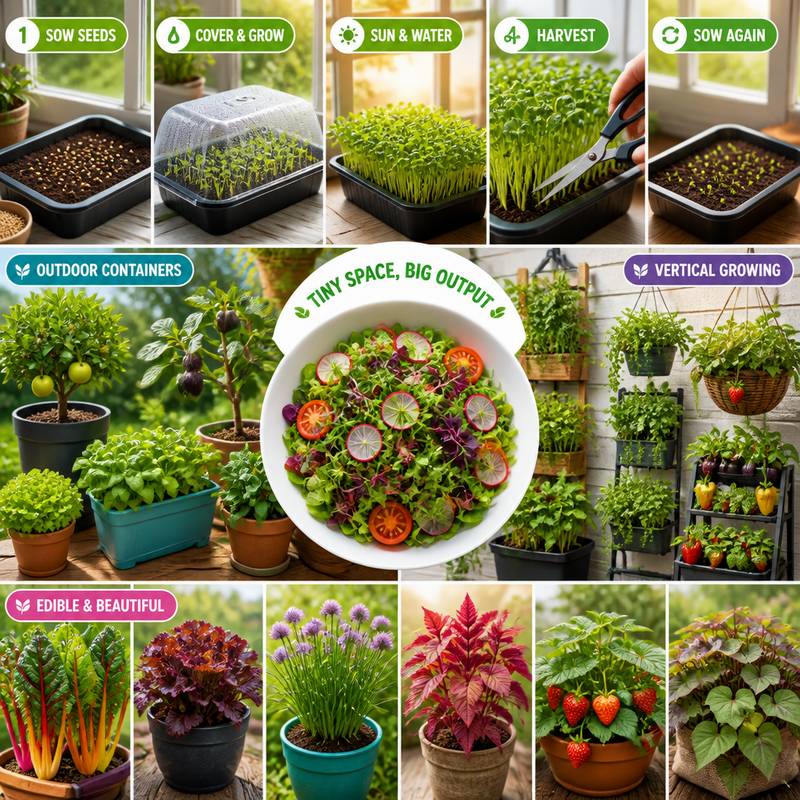 If you’ve ever looked at a windowsill and thought, That’s not a garden, that’s just where the dust lives, microgardening would like a word. The whole idea is simple: tiny space, big output.
The trick is speed and turnover. Microgreens, those 2- to 3-inch baby seedlings, are ideal because they come up fast indoors, sometimes in about a week. Scatter seeds over a shallow tray of light, sterile potting mix, cover with a dome, keep them warm, sunny, and just moist enough. Arugula, broccoli, cabbage, kale, mustard greens, mizuna, and radish are among the quickest. Beets, chard, and nasturtiums usually take 10 to 14 days.
Once a second set of leaves appears, cut the greens at soil level with scissors and use them in salads, smoothies, sandwiches, or stir-fries. Then sow again. Better still, plant every few days so the harvest keeps rolling.
Outside, compact growers like basil, leaf lettuce, and mint do especially well in containers and keep producing through the season. Dwarf apple and fig trees can also grow in 10- or 20-gallon planters or in the ground.
And when floor space runs out, go vertical. Trellises, wall planters, hanging baskets, and tiered stands can support herbs, berries, greens, and compact tomatoes, peppers, and eggplants. Add strawberries or herbs to flower pots, and choose edible ornamentals like amaranth, chives, rainbow chard, red lettuces, and sweet potatoes for plants that look good before ending up on the plate.
Posted on 24 May 2026
A Chelsea Garden Changes Postcode, Not Purpose
 At Chelsea, where gardens usually bloom for a week and then dissolve back into memory, one of this year’s most resonant spaces is getting a second life. Trussell’s Together Garden, awarded gold at the RHS Chelsea Flower Show, will be moved to Strabane, County Tyrone, becoming the first Chelsea show garden ever relocated to Northern Ireland.
The garden’s future home is the Strabane Community Project, which runs education and employment programmes and a Trussell-supported foodbank. For a group of women from the project who travelled to London, the moment carried unusual weight: a spectacle they had only watched on television was suddenly becoming part of their town.
Designed by Yorkshire-based Rob Hardy after a visit to Strabane, the scheme centres on connection. Intersecting paths and a sheltered seating area are meant for conversation, reflection and shared tea. Its standout timber arch works by mutual dependence, each piece supporting the others, an apt metaphor for the garden’s theme of togetherness.
Hardy won gold on his first Chelsea attempt. Beyond the medal, the lasting purpose is in Strabane, where the garden will serve a community facing high unemployment and deprivation. The seating area, briefly used this week by well-known visitors including Irish President Catherine Connolly, is intended for therapy and quiet support.
Funded by Project Giving Back, the garden speaks about hunger without growing food, stressing that hunger is driven by income, not simply supply. Construction in Strabane is planned over the summer, with opening expected in September.
Posted on 23 May 2026
Chelsea Flower Show Gets Flirty, Wired and More in Step With a New Crowd
 Chelsea Flower Show is trying to loosen the tie and unbutton the collar.
One of this year’s big signals came from Aphrodite’s Hothouse, a gold medal-winning pleasure garden by James Whiting, founder of Plants By There. Backed by Bath-based sexual wellness company Lovehoney, the display leaned hard into romance: deep reds, pinks, velvety heart-shaped leaves, plus anthuriums, orchids and hanging nepenthes. Whiting’s idea was simple: if younger people are less likely to have outdoor space, meet them where they live, with houseplants and a design language they already understand.
That shift runs through the show. The Royal Horticultural Society says it wants gardens that speak to new communities, and this year’s line-up makes that plain. The Silent No More garden uses planting and form to open discussion around gynaecological cancers. Another project, created with young people from The Children’s Society, draws on the Japanese idea of imperfect beauty. The Young Minds garden focuses on the mental health pressures facing young people.
Then there is Enmeshed: Positive Pathways, from Pilton artist Dimitris Koutroumpas and floral designer Gaia Eros. Built from reclaimed computer circuits, native woodland flowers and living fungi, it explores technology, ecology and shared resources through the image of above-ground mycelium. Sponsored by RELOVE Technology, which has given nearly 100 million devices a second life, the installation also includes plant-and-mushroom soundscapes that have left some visitors in tears.
Posted on 22 May 2026
thegardendirectory.org (c)2009 - 2026